‘Parasol lost’ – Faith Ward highlights investor responsibility and need for policymaker focus at planetary solvency report launch

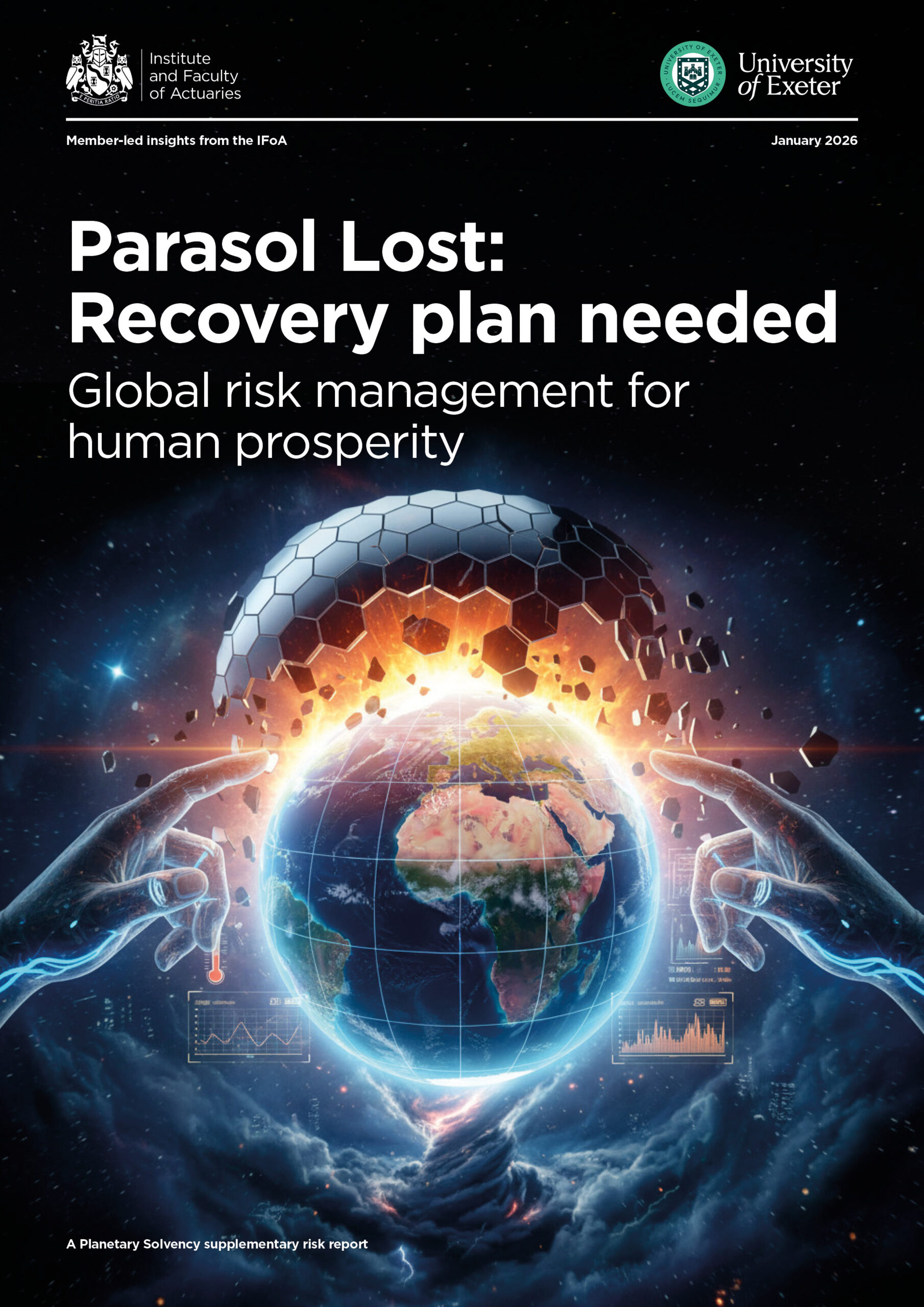
Existing climate models continue to underestimate the climate’s sensitivity to greenhouse gases, according to research published last week by the University of Exeter and Institute & Faculty of Actuaries.
‘Parasol lost’, the new report, demonstrates that current Net Zero carbon budgets would not limit warming to 1.5C. The challenge is deepened by the loss of a hidden ‘sunshade’ effect from air pollution – thus the report’s Miltonian title. Faith Ward, Chief Responsible Investment Officer at Brunel Pension Partnership, spoke on the media panel that launched the publication earlier this week.
“As pension funds, we are highly diversified and exposed to entire value chains, so we are acutely aware that these systemic risks could lead to catastrophic financial damage to investment returns, to our funds and to our scheme members,” said Ward. “That’s why we commend this work from IFOA and UOE, which builds the critical evidence to for pension funds to call for action from policy makers, regulators, as well as our own advisors and asset managers.”
The report highlights that its findings are based on the work of both scientists and actuaries, and that both groups are calling for rapid action via a Planetary Solvency Plan.
A Planetary Solvency Plan would:
✅ Integrate Planetary Solvency risk assessments
✅ Cut methane emissions 30% by 2030
✅ Halt global deforestation
✅ Supercharge the energy transition
The report’s multiple authors include Sandy Trust, Director of Sustainability Risk at Baillie Gifford and Sustainability Board Member, Institute and Faculty of Actuaries; Dr Jesse F. Abrams, Senior Research Impact Fellow at Green Futures Solutions, University of Exeter; and Oliver Bettis, ESG Actuary at Great Lakes Insurance. The Foreword was written by Dr David King, Founder and Chair of the global Climate Crisis Advisory Group.
You can download the report on both the Green Futures Solutions (University of Exeter) and IFoA websites.
The report builds on the work of three related reports published between 2023 and 2025: